Standard desk height: how tall should a desk be?
The standard desk is 72–76 cm (28–30 in) high. The standard person it was made for is harder to find, so here is how to get the height that fits you, and the legs to match.
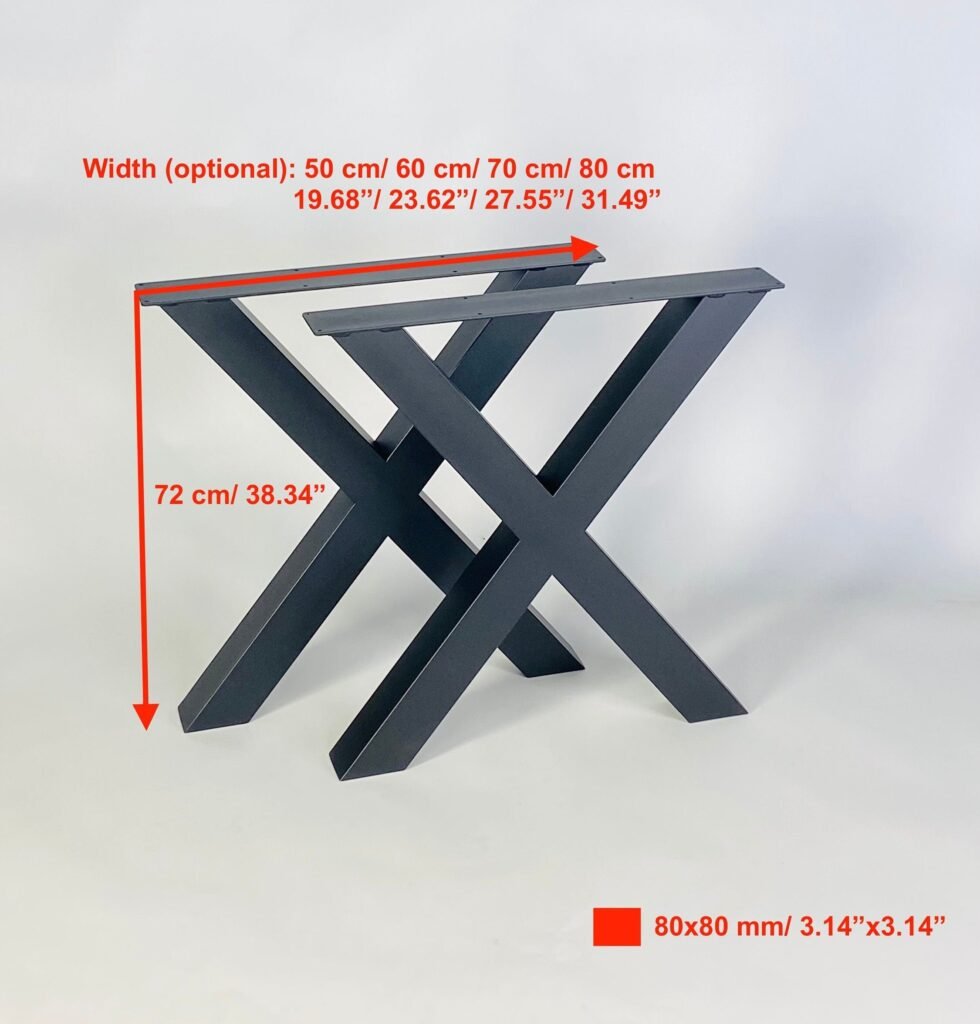
Most office and home desks are 72–76 cm (about 28–30 in) high, measured to the top surface. That range suits most adults on an adjustable office chair, which does more of the work than it gets credit for. If you share the desk, or you are buying for an office, stay inside it.
Find your own height in two minutes
- Sit on the chair you will use, feet flat on the floor and thighs roughly level.
- Let your shoulders drop and bend your elbows to about 90°.
- Measure from the floor to the underside of your forearm. That is the height for the top of the desk.
Workshop tip. Typing on a keyboard on the desk? Take a centimetre or two off, so your wrists stay straight.
Starting points by body height
A first guess, before you check it with the method above and your own chair:
| Your height | Desk height |
|---|---|
| Under 160 cm (5′3″) | 64–68 cm (25–27 in) |
| 160–170 cm (5′3″–5′7″) | 68–72 cm (27–28 in) |
| 170–180 cm (5′7″–5′11″) | 72–76 cm (28–30 in) |
| 180–190 cm (5′11″–6′3″) | 76–80 cm (30–31.5 in) |
| Over 190 cm (6′3″) | 80 cm and up (31.5 in+) |
Check it against your chair
Leave 25–30 cm between the chair seat and the top of the desk, so your legs fit underneath and your arms rest comfortably. A higher chair needs a higher desk; a footrest helps if the chair has to go up and your feet no longer reach the floor. Try it with your own chair:
Work out your leg height
Leg height = table height − top thickness
- Leg height
- 71 cm
- Seat to top
- 27 cm
- Usual desk height
- 72–76 cm
Comfortable: 27 cm from seat to top, inside the 25–30 cm most people like.
Standing desk height
Standing, the rule is the same: forearms level with the desk, elbows at about 90°. For most adults that is 95–125 cm. A fixed standing desk only fits one person. If several people use it, a height-adjustable frame is the kinder choice.
How tall do the legs need to be?
Quick maths. Leg height = desk height − top thickness. A 74 cm desk with a 4 cm top needs 70 cm legs. With a 2.7 cm worktop it needs about 71 cm.
Check the leg height on the product page before you order. Need a height that isn’t listed? We make every set to order: send us the size.
Desk legs
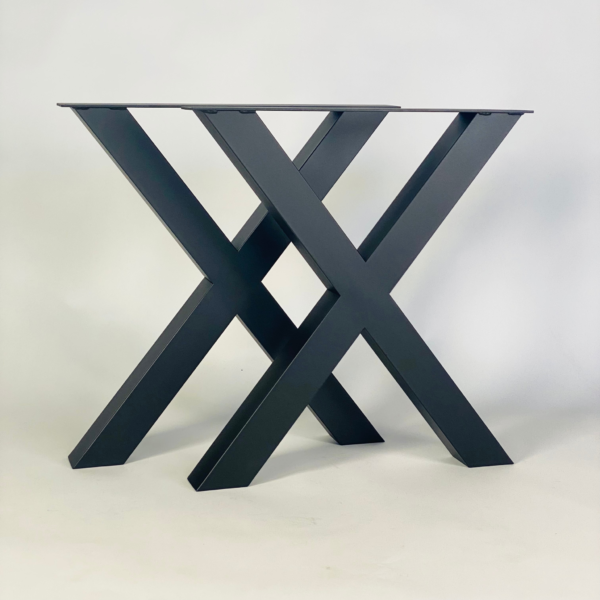
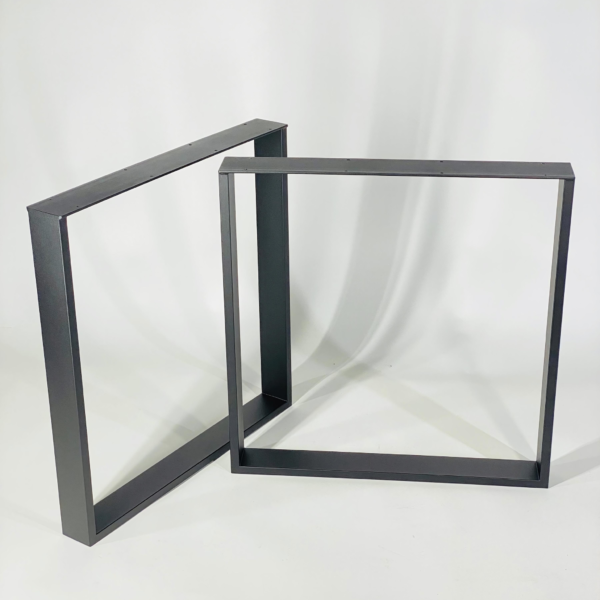
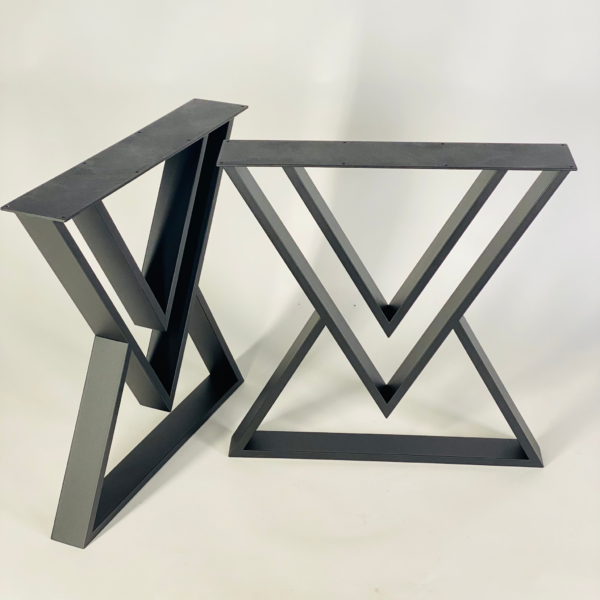
Depth and width
A desk 60 cm deep works for a laptop; 70–80 cm leaves room for a monitor at arm’s length with the keyboard in front of it. For two monitors or a drawing tablet, go for 80 cm.
Length follows what sits on it: 120 cm for one screen and a few papers, 140–160 cm for two screens, 180 cm and up if two people share it. For the legs, pick a frame 10–20 cm narrower than the depth of the top. Building your own? The butcher block desk guide walks through it step by step.
Monitor height
Desk height and screen height are two different settings. With the desk right for your arms, raise the screen until its top edge is at or slightly below eye level, about an arm’s length (50–70 cm) away.
Laptops sit far too low on their own; a stand plus a separate keyboard fixes that. Raising the whole desk to lift the screen only moves the problem to your shoulders.
Typing, writing and drawing
- Typing: keyboard close to elbow height, wrists straight. This is the case the standard 72–76 cm range is built for.
- Writing and reading: a few centimetres higher feels better, because you lean on the surface rather than float your hands above it.
- Drawing and craft work: many people like 2–5 cm more again, or a tilted board on top.
- Gaming: the same as typing. With a low gaming chair, lower the desk rather than raising the chair until your feet dangle.
Corner and L-shaped desks
Keep both parts at exactly the same height so the joint is flush; your mouse will find a 2 mm step every single time. Order the same leg height and the same top thickness for both runs, and support the corner where the two tops meet.
Common mistakes
- Buying for the standard, not the person. A 75 cm desk is too high for many people under 165 cm, unless the chair goes up and a footrest goes under.
- Forgetting the top. Legs listed at 72 cm plus a 4 cm top make a 76 cm desk, not 72.
- Measuring the wrong chair. Measure the chair you will actually use, at the setting you will actually use.
- No knee room. A drawer or rail under the top can steal 10 cm of knee space. Frame legs leave the middle free.
Questions
28–30 inches (72–76 cm). 29 inches (about 74 cm) is the most common single figure.
72–76 cm to the top surface. Most fixed-height desks sold in Europe and the US fall inside that range.
Yes, for most people between about 170 and 185 cm tall with an adjustable chair.
The same rule as any desk: forearms level with the desktop, elbows at about 90°. For most adults that lands between 68 and 76 cm.
It depends on the child’s height; use the elbow method above. Most children need a desk well below 72 cm, which is why adjustable desks suit them best.
Keep reading
- How to build a butcher block desk with metal legsHow to build a butcher block desk with metal legs: top size and thickness, leg width and height, where to put the legs and how to fix them.5 min read
- How tall should table legs be?Table leg heights for dining tables, desks, coffee tables, consoles and bar tables, and how to work out leg height from the thickness of your top.1 min read
- Standard dining table height: how tall is a dining table?Standard dining table height is 74–76 cm (29–30 in). How to match it to your chairs, counter and bar heights, and how tall the legs must be.3 min read
- X-shaped table legsX-shaped metal table legs for desks, dining and coffee tables, plus X pedestal bases for round tops. Four finishes, made to order in Latvia.1 min read
Not a standard size? We weld to order.
Send us the height, width and hole pattern. We quote within one working day.