Standard dining table height: how tall is a dining table?
Most dining tables stand 74–76 cm (29–30 in) high. The number that decides whether dinner is comfortable is a different one: the gap between the chair seat and the tabletop.
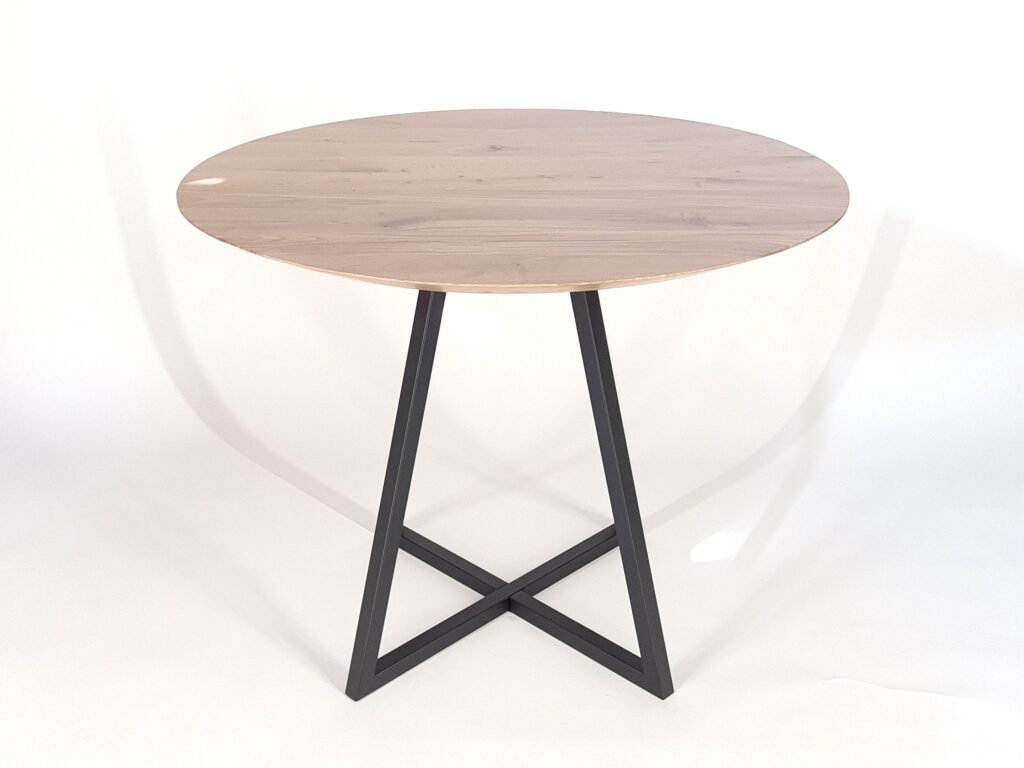
A dining table is usually 74–76 cm (about 29–30 in) high, measured to the top surface; 75 cm is the most common single figure. That height suits ordinary dining chairs, whose seats sit at about 45–48 cm. Round, square and extending tables follow the same rule. The shape of the top changes how many people fit, not how high it should be.
Check it against your chairs
What matters at the table is the gap between seat and top. Aim for 25–30 cm: knees below, elbows above, nobody hunched.
| Seat height of the chair | Table height |
|---|---|
| 43–44 cm | 70–74 cm |
| 45–46 cm | 72–76 cm |
| 47–48 cm | 74–78 cm |
Measure the chairs you already own before you order the legs. Upholstered seats sink a little when you sit down, so measure with some weight on them. Or try your numbers here:
Work out your leg height
Leg height = table height − top thickness
- Leg height
- 72 cm
- Seat to top
- 29 cm
- Usual dining table height
- 74–76 cm
Comfortable: 29 cm from seat to top, inside the 25–30 cm most people like.
Knee room and armchairs
Many tables have a rail, the apron, under the top. Keep its underside at least about 63 cm (25 in) above the floor, so knees fit and chairs with arms slide in.
Watch out. A 10 cm apron on a 75 cm table leaves only about 61 cm for knees. Steel frame legs and pedestal bases have no apron, which is one reason they suit dining tables: the full height under the top is free.
Dining, counter and bar heights
| Table | Height with the top | Seat height |
|---|---|---|
| Dining table | 74–76 cm (29–30 in) | 45–48 cm |
| Counter-height table | 90–92 cm (35–36 in) | 60–66 cm stools |
| Bar-height table | 102–107 cm (40–42 in) | 73–80 cm stools |
| Dining bench | 43–47 cm | – |
Pairing the table with a bench? Keep the bench seat at chair height, 43–47 cm. See metal bench legs.
How tall do the legs need to be?
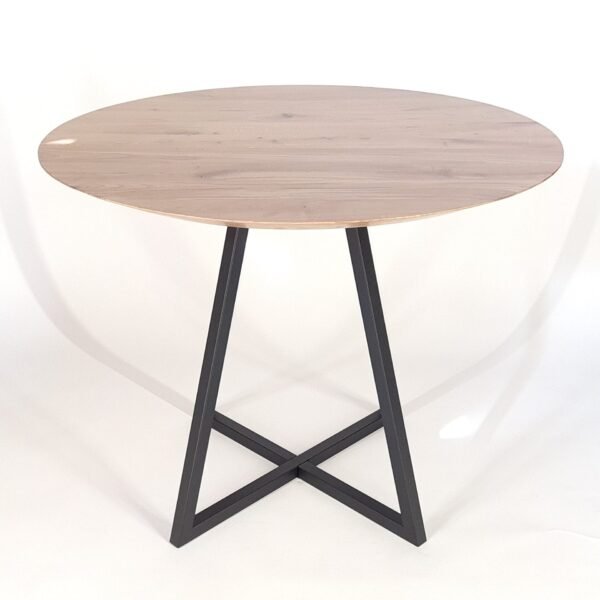
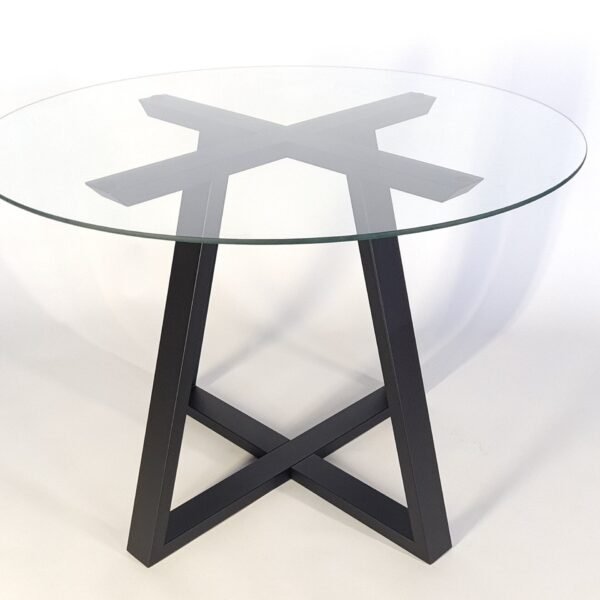
Quick maths. Leg height = table height − top thickness. Our Cross pedestal base is 72 cm high, so with a 3 cm top the table stands at 75 cm.
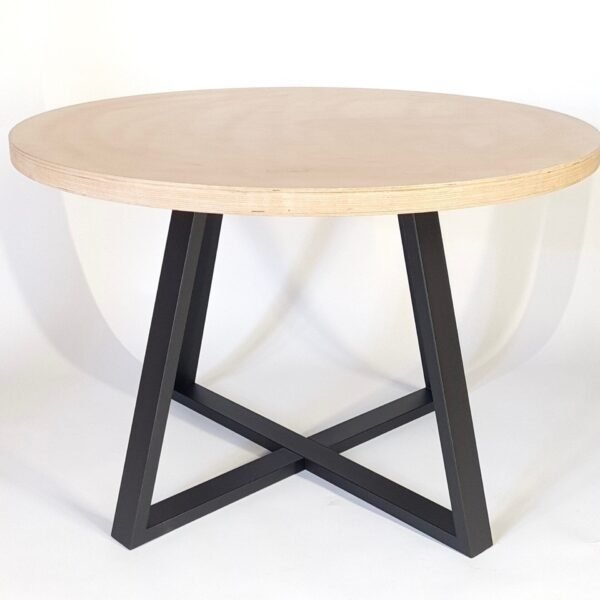
A thick slab changes the sum: a 6 cm top on 72 cm legs gives 78 cm, which is too high for most chairs. In that case ask for shorter legs; we make every set to order. Send us the size.
Width and seats
Height is only half the fit. Allow about 60 cm of edge per person and 75–90 cm of depth, so plates and serving dishes fit without a negotiation. For the legs, pick a frame 10–20 cm narrower than the depth of the top. More in what size legs a dining table needs.
Extending tables
Extension leaves keep the same height as the rest of the top, so the rule does not change. What changes is the support. With frame legs at the ends, the leaves sit between them and the table stays steady; a single pedestal base under a long extended top may need a second support in the middle. Plan the legs for the longest length you will use.
Outdoor and kitchen tables
A garden dining table follows the same 72–76 cm, but outdoor chairs often have lower, deeper seats, so check the seat height before you choose. A kitchen table you eat at is a dining table. A kitchen island you sit at on stools is counter height, 90–92 cm.
Tall or short families
The standard suits most adults. If everyone at the table is tall, 77–78 cm with chairs to match feels better; for a family of shorter people, 72–73 cm. Keep the 25–30 cm gap between seat and top either way.
We weld every set to order, so a non-standard height is possible: send us the height and we quote within one working day.
Common mistakes
- Forgetting the top. The leg height on a product page is not the table height.
- Mixing old chairs with a new table. Antique and café chairs are often lower or higher than 45–48 cm. Measure them.
- A deep apron. A 10 cm rail on a 75 cm table leaves only about 61 cm for knees.
- A thick slab on standard legs. 5–8 cm slabs need shorter legs to stay at 75 cm.
Questions
74–76 cm to the top surface; 75 cm is the most common. It is the same in the UK, the rest of Europe and the US.
29–30 inches. 29.5 inches is about 75 cm.
For standard dining chairs, yes. 80 cm suits taller chairs with seats around 50 cm, or a working table you mostly stand at.
Not with lower chairs (seats of 42–44 cm). With standard chairs it feels a little low but still works.
Yes. A round table with a pedestal base stands at the same 74–76 cm. See what size base a round table needs.
Keep reading
- How tall should table legs be?Table leg heights for dining tables, desks, coffee tables, consoles and bar tables, and how to work out leg height from the thickness of your top.1 min read
- What size legs does a dining table need?How wide dining table legs should be, how much overhang to leave, how far in from the ends to set them, and how many people a table seats.1 min read
- What size base does a round table need?How wide a pedestal base a round table needs, how many people each top size seats, and how to choose a base for square and oval tops.1 min read
- Live edge table legs: how to choose legs for a slabHow to choose legs for a live edge table: frame or base, leg width for an uneven slab, height for thick slabs, and fixing legs so the wood can move.4 min read
Not a standard size? We weld to order.
Send us the height, width and hole pattern. We quote within one working day.