Live edge table legs: how to choose legs for a slab
A live edge slab is heavy, it moves with the seasons, and it is never the same width twice. The legs have to handle all three without stealing the show.
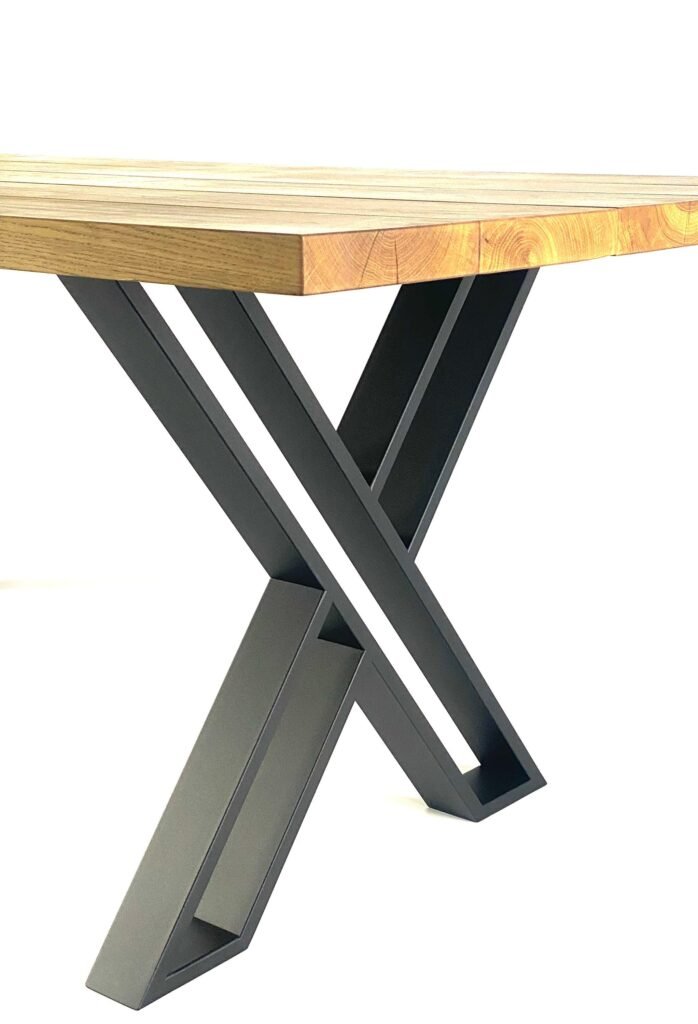
A live edge table keeps the natural edge of the tree. That gives you three things a sawn board doesn’t have: an uneven width, a lot of weight and more movement as the wood takes up and loses moisture. The slab, in other words, still has opinions. Each of them changes how you choose and fix the legs.
1 Frame legs or a base?
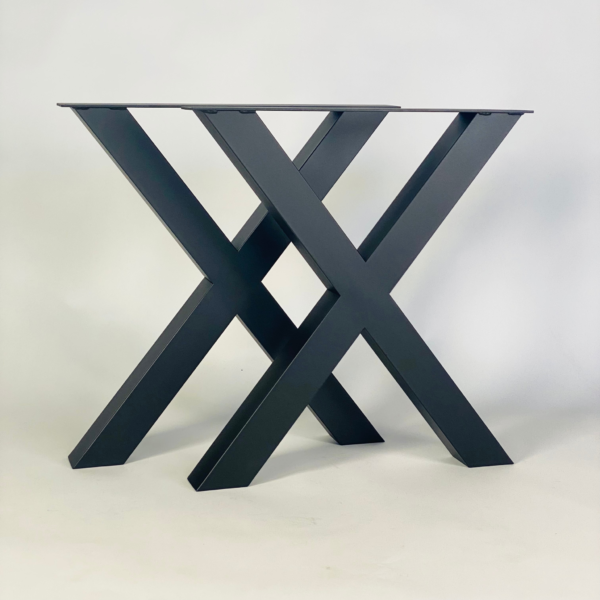
- Frame legs at the ends (X-shaped or rectangular) are the classic choice for long dining slabs and desks. They carry a heavy slab well and leave the middle free for chairs. See X-shaped legs or a rectangular frame such as Square.
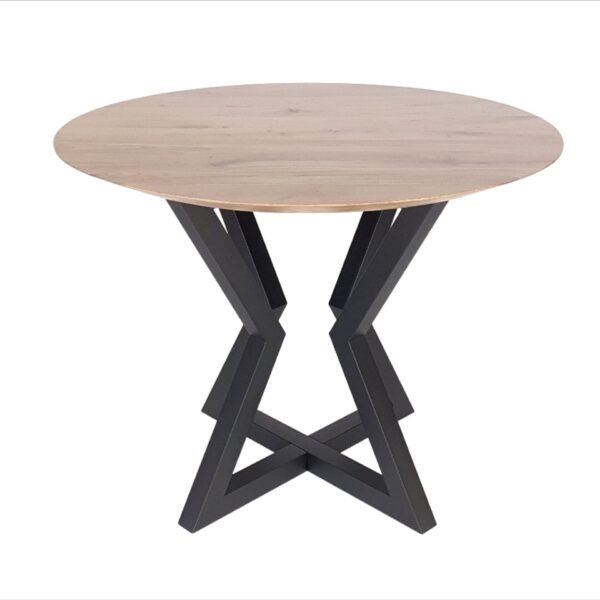
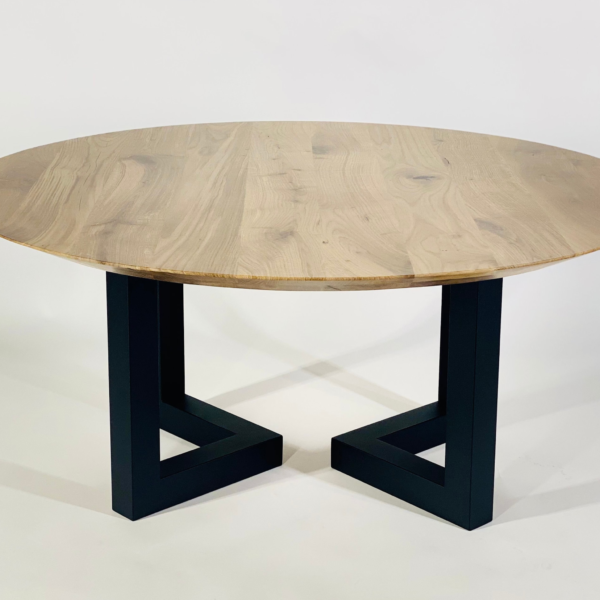
- A centre base (cross, star or spider) suits round and short slabs, and cookie-style rounds cut across the trunk. See pedestal and round table bases.
- Low L-shaped legs suit live edge coffee tables and benches. See bench and coffee table legs.
2 Width: measure the narrowest point
A slab is wider in some places than others. Measure its width at each end, where the legs will sit, and take the smaller figure. Choose legs 10–20 cm narrower than that, so the frame stays under the slab and never peeks out past the edge.
Workshop tip. If the two ends differ a lot, legs of different widths can be made to order. Send us both measurements.
3 Height: subtract the slab
Slabs are thick, so the usual leg heights can end up too tall. Leg height = table height − slab thickness:
| Table | Target height | 5 cm slab | 7 cm slab |
|---|---|---|---|
| Dining table | 75 cm | 70 cm legs | 68 cm legs |
| Desk | 74 cm | 69 cm legs | 67 cm legs |
| Coffee table | 43 cm | 38 cm legs | 36 cm legs |
| Bench | 45 cm | 40 cm legs | 38 cm legs |
Work out the legs for your slab
Leg height = table height − top thickness
- Leg height
- 69 cm
- Seat to top
- 29 cm
- Usual dining table height
- 74–76 cm
Comfortable: 29 cm from seat to top, inside the 25–30 cm most people like.
More on heights: dining table height, desk height.
4 Weight
Quick maths. A dry oak slab weighs roughly 700 kg per cubic metre. A 200 × 90 × 6 cm dining slab is about 0.11 m³, so around 75 kg before any finish.
Walnut and elm are a little lighter, but still heavy. Choose a frame or base made for a dining table rather than light hairpin-style legs, and set the legs 20–40 cm in from the ends so a heavy overhang can’t tip the table. Tell us the slab size and the wood when you order, and we’ll tell you which legs suit it.
5 Prepare the slab
6 Fix the legs so the wood can move
Solid wood swells and shrinks across its width through the year; a wide slab can move several millimetres. Screw the legs on through the mounting plate. If the plate has slotted holes, put the screws in the middle of the slots, so the wood has room both ways.
Watch out. Never glue the legs on, and keep every screw at least 6–8 mm short of the top surface. Glue fights the wood, and the wood usually wins.
For legs you want to take off when you move house, fit threaded inserts into the slab and use machine screws.
Live edge coffee tables and benches
A coffee table usually stands 40–45 cm high with the top on and looks right at about two-thirds of the sofa’s length. Our L-shaped bench and coffee table legs Lshape 2 and Big Lshape are 40 cm high, so with a 4–5 cm slab the table lands at 44–45 cm. The same legs make a bench at seat height.
For a round slice of trunk, a low coffee table base sits under the centre.
Live edge desks
Check the slab’s narrowest point once more: below about 60 cm deep there is no room for a monitor at arm’s length. Leave the back edge clear for a monitor arm clamp, and drill any cable hole before you finish the wood. The desk building guide covers the rest.
How thick should the slab be?
Dining slabs are usually 5–8 cm thick; thinner slabs can cup across their width. Coffee table and bench slabs are often 4–6 cm. Thicker looks heavier and more dramatic, but every extra centimetre is more weight on the legs and a centimetre less leg height.
Which finish for the legs?
Black steel lets the grain do the talking and suits almost any wood. White works with pale woods and light rooms. Anodic gold and chrome make a lighter, more decorative contrast, especially under dark woods such as walnut.
Legs and bases for slabs
Questions
No, but they need legs that suit the weight and the narrowest width of the slab, and a height that allows for its thickness.
Yes. Every set is welded to order, so width and height can follow your slab. Send us the measurements and we quote within one working day.
Keep reading
- Standard dining table height: how tall is a dining table?Standard dining table height is 74–76 cm (29–30 in). How to match it to your chairs, counter and bar heights, and how tall the legs must be.3 min read
- How to build a butcher block desk with metal legsHow to build a butcher block desk with metal legs: top size and thickness, leg width and height, where to put the legs and how to fix them.5 min read
- X-shaped table legsX-shaped metal table legs for desks, dining and coffee tables, plus X pedestal bases for round tops. Four finishes, made to order in Latvia.1 min read
- What size base does a round table need?How wide a pedestal base a round table needs, how many people each top size seats, and how to choose a base for square and oval tops.1 min read
Not a standard size? We weld to order.
Send us the height, width and hole pattern. We quote within one working day.